
Blog
Insights, guides, and updates from the world of AI and business automation

OpenClaw + Jev: Stop Burning 26,000 Tokens on "Thank You"
ByGilad Dor Levi
A single "thank you" can cost OpenClaw around 26,000 tokens. Here's how I put TypeSafe AI's Jev in front of it, a model that returns a decision instead of text, and cut that to about 400.

How to connect a Claude subscription to OpenClaw 2.0: full VPS setup in 2026
ByGilad Dor Levi
Anthropic blocked Claude subscriptions in OpenClaw in April 2026, and version 2.0 brings them back. My step-by-step VPS setup with setup-token and Telegram, plus what's new and what to check before upgrading.
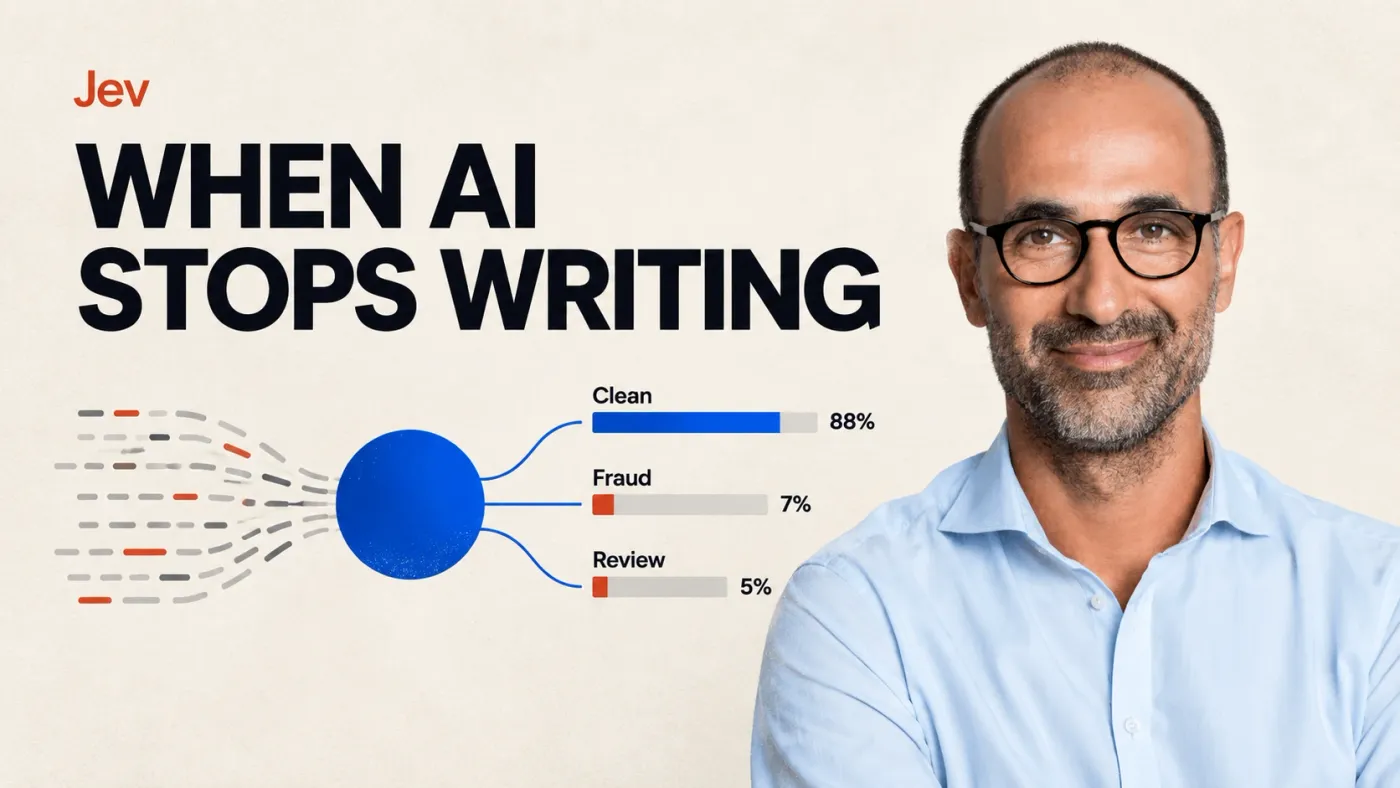
Jev: the new AI model that answers with probabilities, not words
ByGilad Dor Levi
TypeSafe AI just launched Jev, a System 1 model built by an OpenAI RLHF co-creator that returns calibrated probabilities instead of text, in under 500 milliseconds.
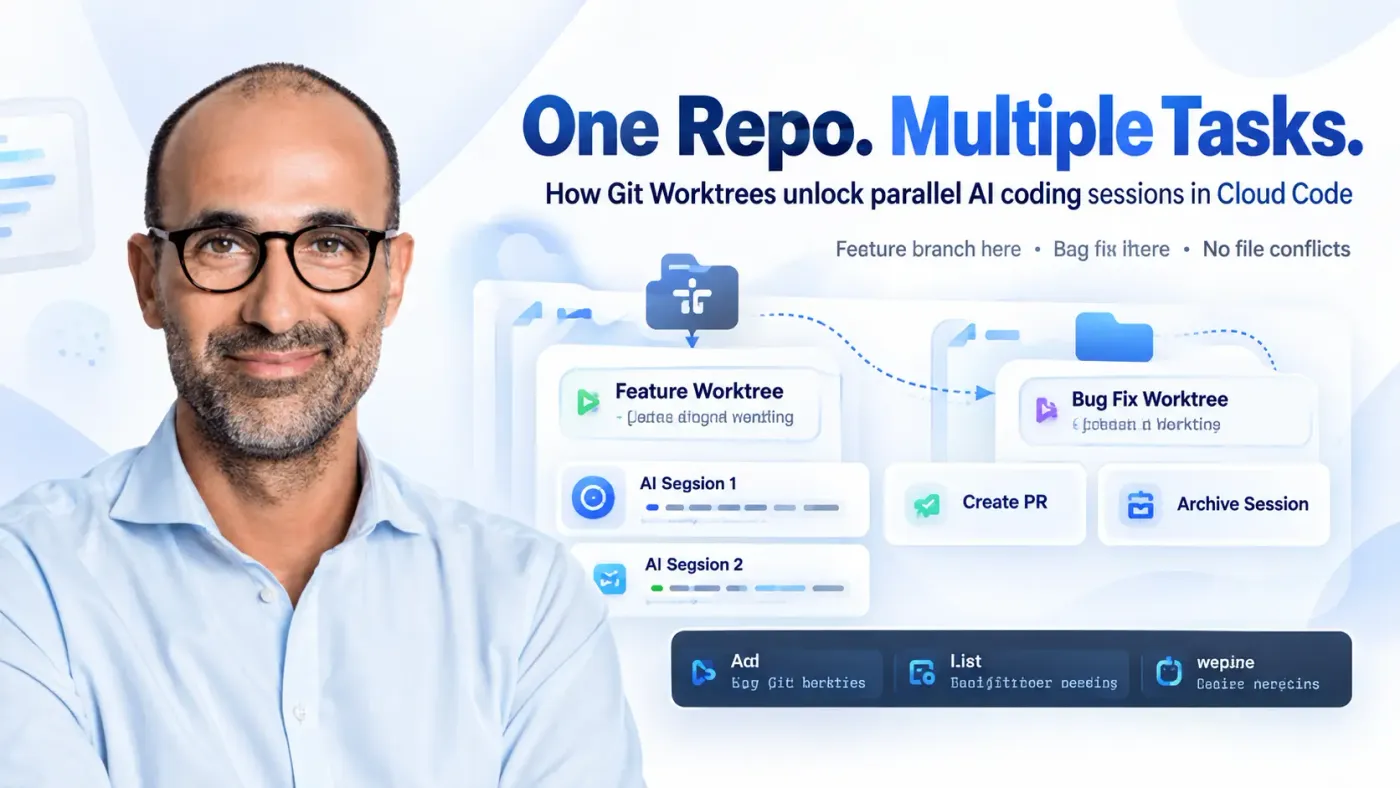
Git worktrees: how to run two Claude Code sessions in parallel
ByGilad Dor Levi
A walkthrough of git worktrees, the git feature that checks out several branches into separate folders at once, and why it turns out to be exactly what parallel AI coding sessions need.
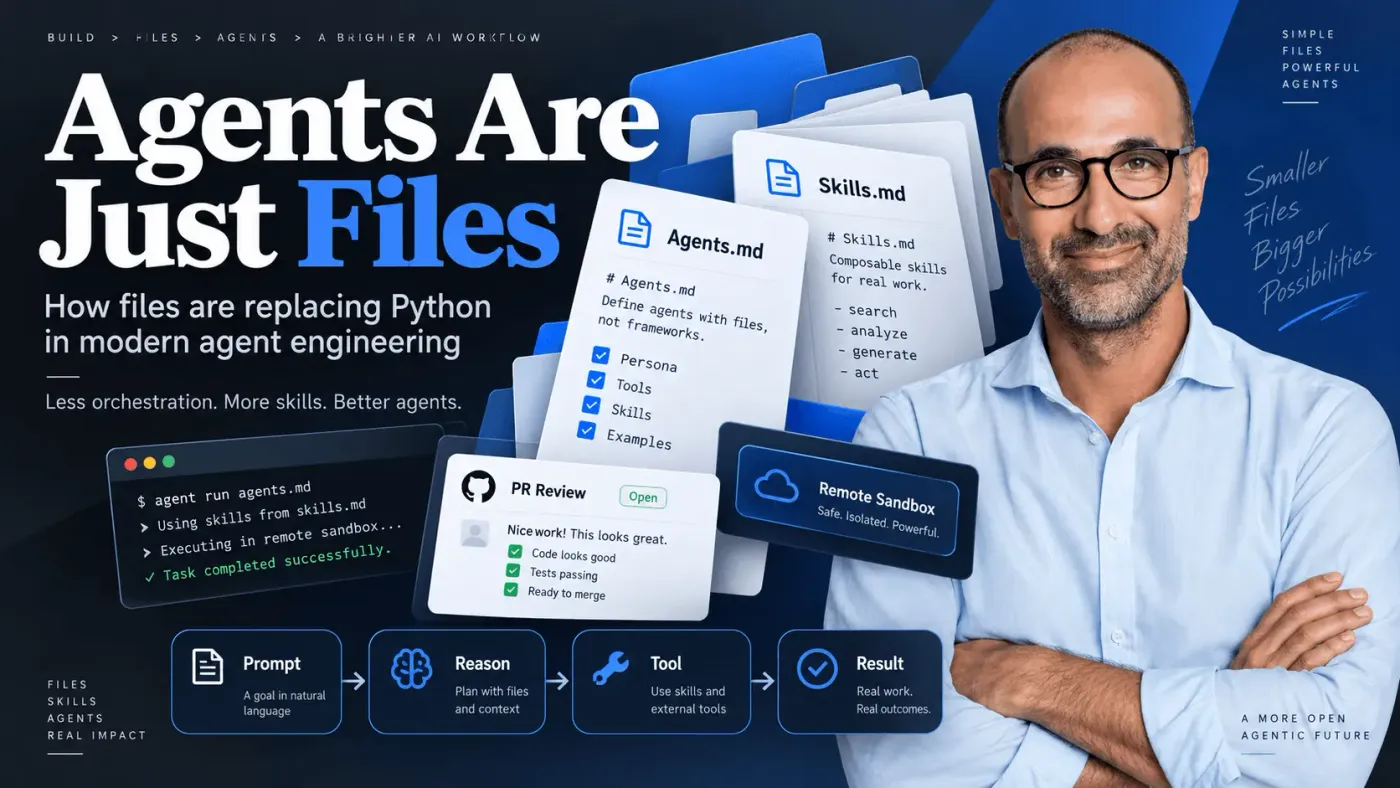
Agents are just files: how Google's newest Gemini agent replaces code with markdown
ByGilad Dor Levi
A Google conference talk rebuilds the same GitHub PR agent three times, replacing more and more code each round with plain markdown files, until version three barely has any code left at all.
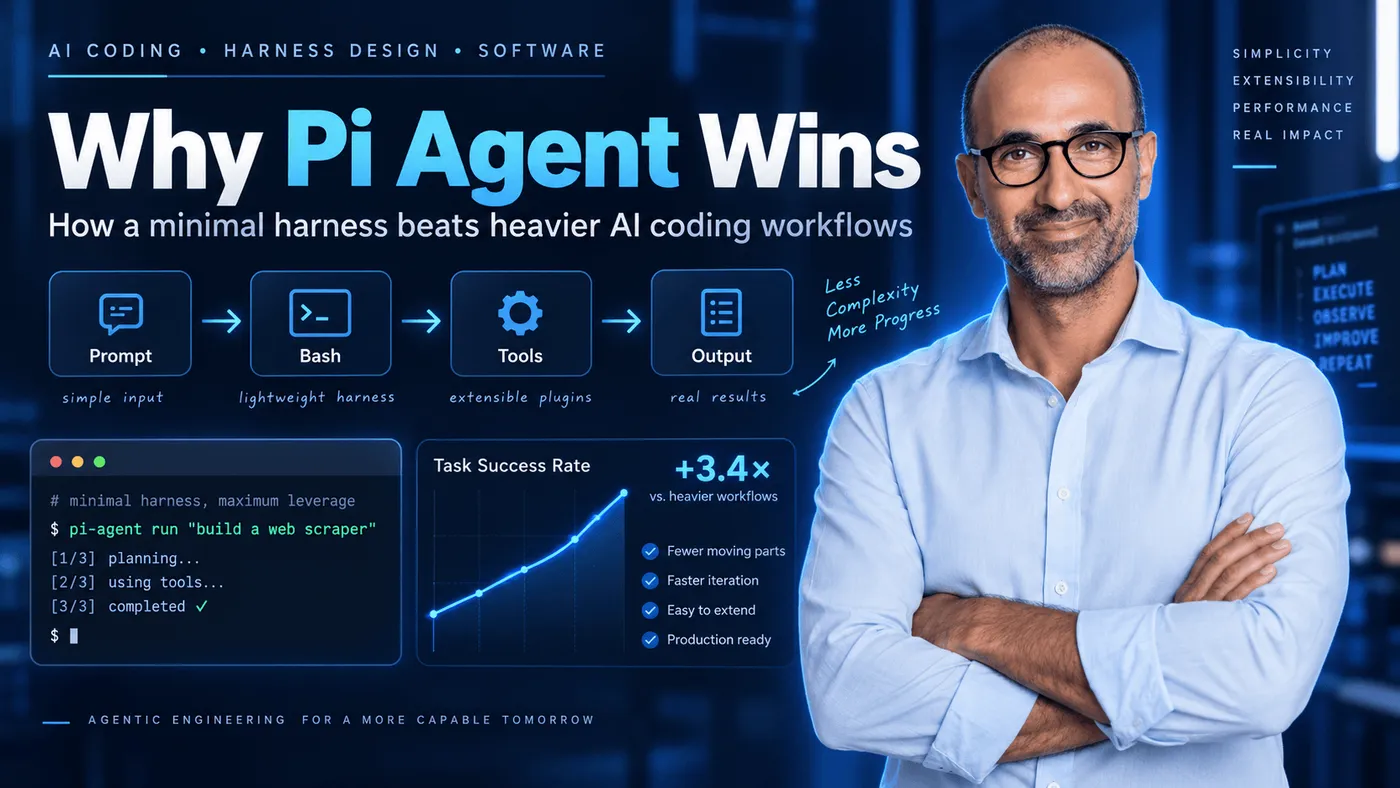
Armin Ronacher on Minimal Agents, Trust, and the Interface Nobody's Solved Yet
ByGilad Dor Levi
Armin Ronacher, the creator of Flask and co-founder of Earendil, breaks down why minimal agent harnesses win, why full autonomy has a real ceiling, and why open source can only be judged in hindsight.

What I Learned at Y Combinator's Harness Club About Why the Harness Matters More Than the Model
ByGilad Dor Levi
Takeaways from Y Combinator's Harness Club: how ARC-AGI scores jumped from 30% to 95%+ on the same model, and lessons from Prime Agent, Open Jarvis, and YC's own QM.

Why Fireworks AI's CTO Thinks the Future Is Thousands of Specialized Models, Not One Frontier Model
ByGilad Dor Levi
Takeaways from an interview with Fireworks AI's co-founder and CTO on specialized fine-tuned models vs frontier labs, evals as the real bottleneck, and where AI development is headed.

I Tested Google's TimesFM-3: Forecasting Without Training on My Data
ByGilad Dor Levi
I tested Google's TimesFM-3 on a multivariate sales scenario to see where zero-shot forecasting helps, where it fails, and whether custom models still matter.

How I reduce context and usage waste in Codex and Claude Code
ByGilad Dor Levi
Twelve practical ways I keep context focused, choose models deliberately, and reduce wasted usage when working with coding agents.

Graft: how I would cut repeated code searches for an AI agent
ByGilad Dor Levi
Before switching models, I want to know how much time goes into finding code. Here is how I would use Graft and measure whether its code map saves time and tokens.

How I would build an AI paper-trading agent with Codex and Alpaca
ByGilad Dor Levi
How I would plan a paper-trading experiment: connect Codex to Alpaca, schedule six daily checks, set operating rules, and check availability in Israel.

Where to Find Design Inspiration Before You Prompt Claude
ByGilad Dor Levi
Six kinds of sources I use to give Claude something visual to aim at, so AI website output stops defaulting to the generic average.

Understanding Your Whole Codebase Isn't the Point (And With AI Agents, It Can't Be)
ByGilad Dor Levi
Why partial understanding of a codebase is normal, not a failure, and how AI agents change what actually matters to know.

Claude Fable 5.1 vs GPT-6: I Ran the Same Four Tests on Both
ByGilad Dor Levi
A practical head-to-head between Claude Fable 5.1 and GPT-6 across four identical prompts: game development, research, website cloning, and computer-use automation.

My Agentic Engineering Stack: Interfaces, Subscriptions, and the Skills That Actually Matter
ByGilad Dor Levi
A practical synthesis for working with AI coding agents - vendor-agnostic interfaces, smart subscription stacking, choosing the right harness, and the skills that actually move the needle.

Human on the Loop: What I Learned from BMAD's Founder About the Future of AI Coding
ByGilad Dor Levi
What I took away from a conversation with Brian, founder of BMAD, on staying in control, the coming slop apocalypse, and why human on the loop beats full coding automation.

The Main Workflow Behind Matt Pocock's Skills Repo, Walked Through Step by Step
ByGilad Dor Levi
I walked through the main workflow behind Matt Pocock's popular skills repo - from interview to spec to tickets to implementation with fresh-context code review.

Harness Engineering: The Next Phase After Prompt and Context Engineering
ByGilad Dor Levi
From prompt engineering, through context engineering, to harness engineering - the story of how AI system building actually evolved.

Building Browser Agents That Actually Work: CLI, CDP, and the Sense-Act-Verify Loop
ByGilad Dor Levi
What I learned building reliable browser-driving AI agents: why CLI beats MCP for automation, how to drive Chrome through CDP directly, and the sense-act-verify loop that stops silent failures.

I Tested the Mystery "Ox Alpha" Model for a Day — Here's What I Found
ByGilad Dor Levi
Hands-on first look at Ox Alpha, a mystery stealth model on OpenRouter - games, 3D models, and photo-to-3D tests, plus what's actually confirmed about it.

I Spent a Week with the DeepSeek Harness — Here's How It Compares to Claude Code
ByGilad Dor Levi
A week-long hands-on comparison of DeepSeek Harness and Claude Code - speed, reliability, and design quality, from someone who ran both side by side on the same real tasks.

7 Stages to Build a Professional Website with Codex (Without the AI-Slop Look)
ByGilad Dor Levi
A practical 7-stage framework for turning an AI-built website from generic to genuinely on-brand, from defining the goal to polishing the final components.

LangFuse: Real Observability for AI Coding Agents
ByGilad Dor Levi
LangFuse is an open-source observability tool that gives you full visibility into every request an AI agent makes: what was sent to the model, what it cost, and whether the response was actually good.

Impeccable 4.0: Giving Claude Code Real Design Taste
ByGilad Dor Levi
A look at Impeccable 4.0, an open-source Claude Code skill that detects AI-slop design patterns and replaces them with real design taste, now with two major upgrades: Live Mode and 177 Worlds.

Smart Zone, Dumb Zone: Matt Pocock's Playbook for Planning AI Coding Sessions Before You Touch Code
ByGilad Dor Levi
Every LLM has a smart zone and a dumb zone, and most coding failures happen because context creep pushes us into the dumb one. Here's a full workshop's worth of technique for staying out of it - from a 'grill me' alignment skill to vertical slices to parallel AFK agents.

The Models Are Dead: Thorsten Ball on Why Babysitting AI Coding Agents Is Already Over
ByGilad Dor Levi
AMP's founding engineer says babysitting individual models is over, GitHub contribution graphs are worthless, and most "AI slop" is actually human slop. Here's what a wide-ranging conversation with him reveals about where coding agents are headed.

Why I Let My AI Agent Maintain My Personal Wiki
ByGilad Dor Levi
A look at Andrej Karpathy's idea for an agent-maintained personal wiki.

Zero Trust for AI Agents: Lessons from a 100-Agent Assessment
ByGilad Dor Levi
An assessment of 100 AI agents found a risky capability combination in 98% of its sample. What that result means, what it does not prove and which controls to check before connecting an agent to business systems.

Enterprise RAG That Actually Works: What Cerebras's Internal Knowledge Base Gets Right
ByGilad Dor Levi
Most 'knowledge base' demos are an impressive Obsidian graph that helps no one. An AI chip company built something far more boring - and dramatically more accurate. Here's how it works.

It's Not the Token Count: What Actually Makes or Breaks an AI Product
ByGilad Dor Levi
At the last AI Engineer conference, roughly 300 companies qualified as 'token billionaires' - burning a billion tokens a week. But the question that actually determines success isn't how many tokens you spent, it's whether real humans are using what you built.

OKF: The New Standard That Makes AI-Powered Personal Wikis Shareable
ByGilad Dor Levi
Andrej Karpathy figured out how to build a second brain with an LLM - but without a shared standard, none of them could be shared. Google's Open Knowledge Format fixes exactly that.

Loop Engineering: Overhyped Buzzword or a Real Shift in How Coding Agents Work?
ByGilad Dor Levi
Everyone's talking about loop engineering, but almost no one agrees on what it means. Here's what's actually happening under the hood - and why the stop condition is the only part that really matters.

Harness, Loop Engineering, and LLMOps: How AI Agents Are Actually Controlled
ByGilad Dor Levi
Agent harness, loop engineering, and LLMOps aren't just buzzwords — they're three simple ideas that turn a raw language model into a business AI system you can actually trust.

Kimmy K3: When an Open‑Source Model Upends the AI Balance of Power
ByGilad Dor Levi
A new open‑source model is closing in on frontier performance — and rewriting the cost math for every business building on AI. Here's what it means for you.
No articles found matching your criteria.
How to use the NexAi content library
This library is written for business owners, operators, and technical teams who want to understand what AI automation can do and what it takes to make it dependable. Start with the business process rather than a model or tool. Identify who performs the work today, where delays appear, which information enters the process, and what a successful result looks like. Those questions help separate a task that benefits from automation from one that needs a process change, clearer ownership, or no AI at all.
Start with the problem, not the model
Choose an article based on the problem you are trying to solve: repetitive operations, customer conversations, knowledge retrieval, content work, or agent-based workflows. As you read, list the assumptions behind the proposed approach. Is the required information available and consistent? Can the system act independently, or must a person approve each important step? What should happen when data is missing, an answer is uncertain, or an external service is unavailable? Defining boundaries and exceptions early keeps a promising prototype from becoming a fragile production process.
Test fit before implementation
Turn each idea into a small test that uses representative inputs and a measurable outcome. Useful measures may include handling time, error rate, manual handoffs, cost per completed task, or the amount of rework required. Compare the result with the current process, not with a product demonstration. Review permissions, data retention, usage costs, provider dependency, and export options. For language-model workflows, keep a stable evaluation set with common cases, edge cases, and unacceptable outcomes, then run it again whenever the prompt, model, tools, or source data changes.
Build a process people can operate
A reliable system is more than an API connection. It needs a named owner, concise operating instructions, useful alerts, and a safe manual fallback. Decide who receives failures, who approves sensitive actions, what information is logged, and how the team confirms that the workflow is still producing the expected result. Involve the people who perform the work during the trial. They know the exceptions, shortcuts, and missing context that rarely appear in a process diagram. Their feedback helps turn a technical workflow into a system that fits real work.
Read according to your implementation stage
During research, focus on comparing approaches and understanding limitations. During development, look for material about architecture, tools, evaluation, security, and human review. After launch, move to observability, cost control, incident handling, and continuous improvement. Use search and category filters to connect related articles, and record the decisions you make beside the sources that informed them. The goal is not to adopt every new AI tool. It is to build the organizational ability to choose, test, deploy, and improve useful systems responsibly.
Evaluate sources and claims
When an article discusses a new model, tool, or working method, open the primary source and check what was actually released. Separate a demonstrated capability from a generally available feature and from a result measured in your own environment. Note the date, version, usage limits, and who supplied the evidence. An interesting claim can justify a trial, but it does not replace testing with your organization’s information, users, constraints, and risk tolerance.
Document decisions so the system can improve
For each trial, keep a short record of the goal, representative examples, versions used, and observed result. Include why the team chose to continue, revise, or stop. This record makes decisions easier to revisit when a tool changes, a new employee joins, or a failure returns. It also prevents repeated experiments and connects what the team learns from the library with an operating process the organization can maintain over time.
End each reading session with one practical step
After an article, choose one action that can be completed quickly: map a process, collect ten representative examples, review a permission, estimate cost, or write a stopping condition. Name the person responsible and decide when the result will be reviewed. If the idea cannot be converted into a small and safe test, more information may be needed before development begins. Moving from reading to a focused experiment is the most useful way to discover what fits without committing too early to a platform or architecture.
Questions to take into a team discussion
Before choosing a direction, ask what happens on a day when the system fails, who notices first, and how service continues. Check whether a result can be explained to the user, whether incorrect information can be corrected, and whether permissions match real responsibilities. Ask who owns maintenance, who approves a change, and what conditions would justify switching providers. Short answers to these questions expose gaps early, make alternatives easier to compare, and focus the next round of research on the evidence the team still needs.
Ready to automate?
Let’s build a system that works for you — not the other way around.