
I Spent a Week with the DeepSeek Harness — Here's How It Compares to Claude Code
ByGilad Dor Levi
A week-long hands-on comparison of DeepSeek Harness and Claude Code - speed, reliability, and design quality, from someone who ran both side by side on the same real tasks.

I've been running the DeepSeek Harness for about a week now, testing it side by side with Claude Code on real tasks. Some parts genuinely impressed me. Others felt half-finished. Here's my honest take, including where I think it fits and where it doesn't.
What It Actually Is
First, a distinction worth making: a "harness" and a "model" are two different things. Claude Code is a harness that runs Claude models. Codex is a harness that runs GPT models. The DeepSeek Harness is the same idea from DeepSeek, except it's open source, free, and not locked to DeepSeek's own models. I connected it to an OpenRouter key and suddenly had a long list of models available, not just DeepSeek's.
What's genuinely different is this: because it's open source, I could reach past the model and rewire the harness itself. In a closed harness like Claude Code, I can swap the model, but the tool loop, the agentic behavior, the UI, all of that stays fixed. The DeepSeek project's own framing is "everything is a plugin," and they mean it literally: tools, skills, sessions, sandboxes, storage, the reasoning loop, even the UI. I didn't touch any third-party plugins for this review; I wanted to see how it felt stock. Worth a warning here too, be careful with community plugins from an open ecosystem like this until something has actually reviewed the code.
Setup Was Painless
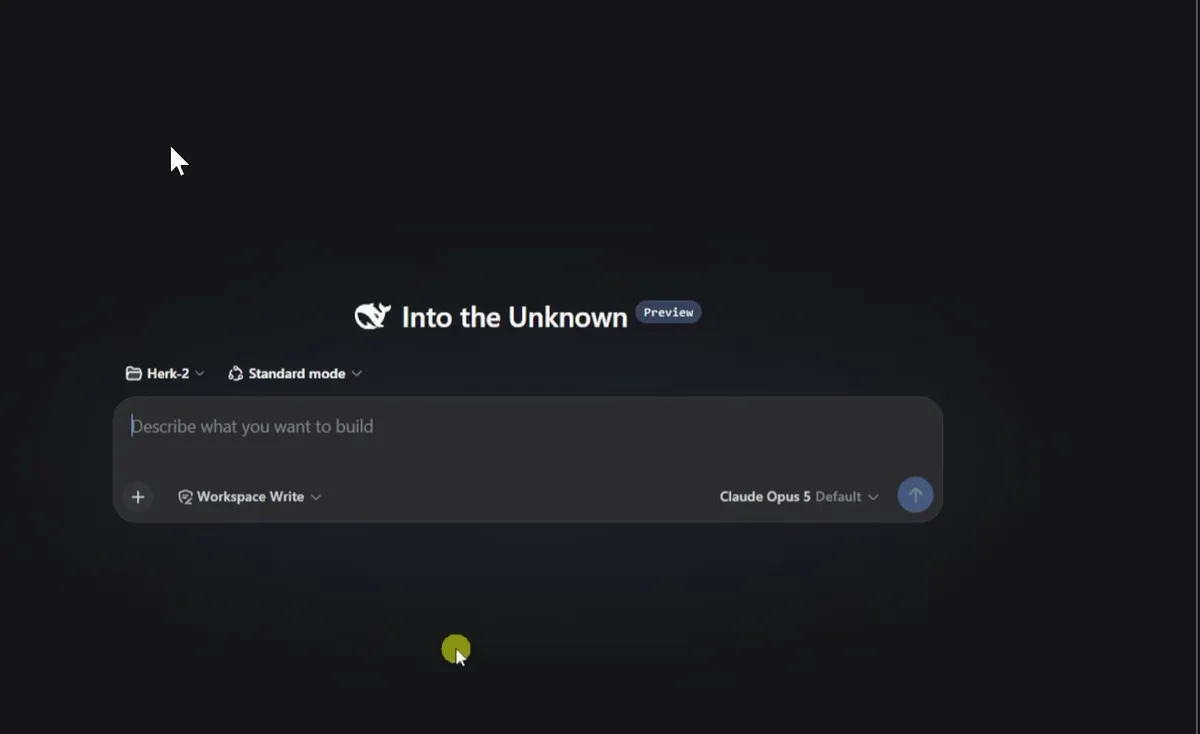
Getting it running locally took a few minutes: add an API key under settings, and I was in. One real limitation right now, I couldn't connect a Claude or Codex subscription directly, it's pay-per-token API billing. I've seen claims that some plugins work around this; I haven't verified that myself.
Four Modes, Four Different Feels
- Standard mode is the full agent, file editing, shell, web search, the works.
- PTC mode is built for heavier, more parallel tasks, multiple chains running at once. On bigger jobs I got noticeably different, often better, results here.
- Minimal mode strips the context injection almost entirely, no reading my instructions files, no loading a skill catalog. It just answers fast. Great for quick one-off questions, not for anything that needs my working context.
- Creator mode is where you build custom presets, plugins, and UI changes. This is the mode that makes the "everything is a plugin" pitch real.
Where It Genuinely Beat Claude Code
Speed, consistently. I ran identical prompts against both tools at the same time against a large personal knowledge base, "find that project we discussed last week." The DeepSeek Harness came back in under a minute more than once, while Claude Code was still searching five minutes later. The same pattern held on a data task, pulling YouTube analytics into a spreadsheet: DeepSeek Harness finished in about 3 minutes, Claude Code took 17.
Where It Fell Short
Design and visual work. The models I tested can't take a screenshot, look at it, and iterate the way Claude Code or Codex can. I had it build a site from my brand assets, and it followed my guidelines reasonably well, but it made layout mistakes that Claude Code's verify-and-iterate loop would have caught immediately. That's more a model limitation than a harness one, but it's worth knowing before committing to it for front-end work.
Reliability is the other soft spot. It's labeled a developer preview, and it feels like one: occasional bugs, a UI mode that wouldn't switch until I restarted, and in longer sessions, real context and compaction issues where it seemed to lose track of the conversation.
Quality: A Fair Fight Isn't Quite Fair
On a research-report task using the same skill file on both tools, Claude Code produced a longer, more heavily sourced, more conservative report. The DeepSeek Harness version was shorter, more confident in its claims, and occasionally asserted something I wasn't sure I agreed with. One caveat: the skill I used was written and tuned for Claude Code, so this wasn't a perfectly even comparison. A skill built specifically for this harness would likely perform better on it.
My Verdict
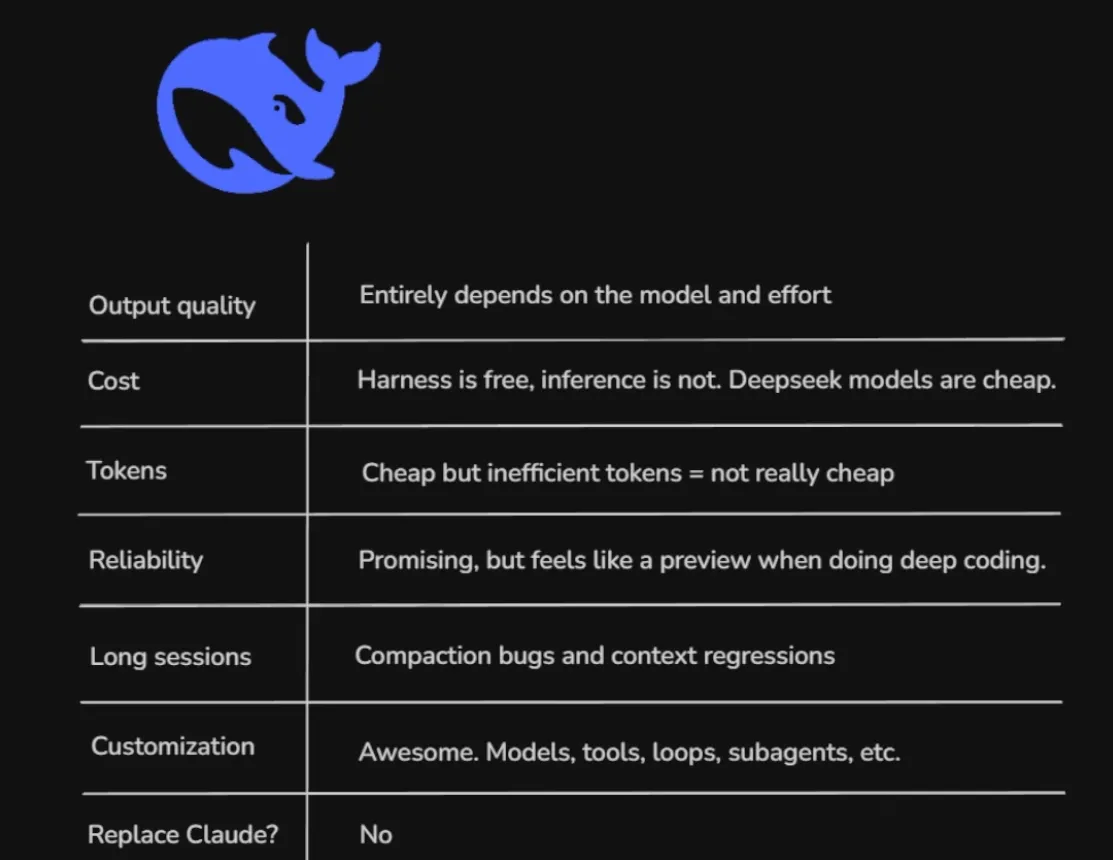
No, it doesn't replace Claude Code for me. For serious, client-facing work, I still trust Claude Code's output more, and if you're already paying for a Claude subscription, you get far better value running Opus through Claude Code than paying per token elsewhere. What the DeepSeek Harness actually is: a free, radically customizable harness worth having in the toolkit, especially for high-volume, lower-stakes tasks where you want to plug in a cheap model, or if you genuinely want to build and tune your own agent behavior instead of working within someone else's rules. It's not a free Claude Code. It's a different tool with a different job.
Keep reading

ArticleAI
What I Learned at Y Combinator's Harness Club About Why the Harness Matters More Than the Model
Takeaways from Y Combinator's Harness Club: how ARC-AGI scores jumped from 30% to 95%+ on the same model, and lessons from Prime Agent, Open Jarvis, and YC's own QM.

ArticleAI
Claude Fable 5.1 vs GPT-6: I Ran the Same Four Tests on Both
A practical head-to-head between Claude Fable 5.1 and GPT-6 across four identical prompts: game development, research, website cloning, and computer-use automation.
GuideAI
A free week of Claude Pro: how to get a guest pass link
Find the Guest Pass link, check who can use it, and understand the trial terms. A step-by-step guide with screenshots.
Follow us
TikTok · X · Instagram · Telegram
Ready to automate?
Let’s build a system that works for you — not the other way around.